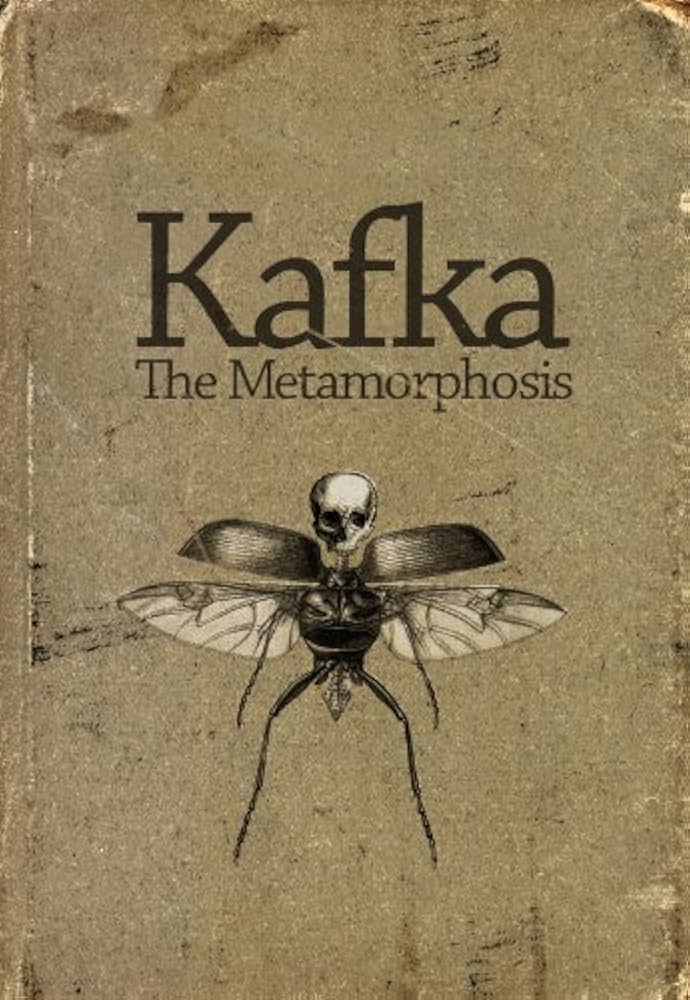
In ‘The Metamorphosis,’ Franz Kafka constructs a family so deeply imbedded with consistency that once their son, Gregor, undergoes a metamorphosis, it becomes clear that his personal value was solely linked to his ability to support his family financially.
Through the metamorphosis of both Gregor and implicitly his sister, Grete, Kafka prompts us to question if the literal transformation into a bug is purely physical, or perhaps also psychological.
Gregor Samsa is depicted as the family’s main source of finance, yet once he awakes to find himself changed into a cockroach, his family neglects him because he is unable to support them.
Due to his inability to provide his parents with money, his family made the decision to let him “be tolerated, simply tolerated.”
Regardless of the spite in the Samsa’s actions, he targets his guilt inwards and inflicts isolation in his room. Beneath the physical change, Gregor remains the person he was before yet cannot communicate it.
As a silent ‘monster’ his metamorphosis brings out the worst in his family. They perceive silence as threatening because they can’t know what their son is thinking.
As a cockroach, he could never convey the person beneath his visible form. As the reader, Gregor can be understood by us, even when his family does cannot do so, being trapped in a form he cannot control, which he could never express to those he needed to understand most.
Kafka’s portrayal could be read as an extreme version of depression, potentially prompting the question whether the change was only seen as so unnatural because it contrasted to the weak and abiding boy from the past.
The Samsa family has a capitalist logic, which explains their ability to almost immediately shut their son out when he is unable to provide for them. Gregor’s value is purely economic, forced to be an exploited worker of the Samsa family, controlled by his mother, a passive complier, and his sister, who plays a huge part in demonstrating how quickly one can be disregarded.
Grete is initially compassionate, with her brother wanting to see her and be appreciated by her, yet she is the one who demands that the family cut him from their family.
Kafka shows how easily Gregor parts from his money for the sake of his family and how quickly they take it by conveying that they had “just become used to it,” symbolising the recurring habit of taking Gregor for granted.
Similarly, they “took receipt of his money” which he “handed over,” implying a formal transaction as though from the beginning, there was always distance between him and his family.
As Gregor had a weak relationship with his parents, the pain of his true sister and friend wanting to remove him entirely can be deemed inexcusable from someone so different before the metamorphosis. Grete shows how one can let go easily once they become worthless. She is the only other named character, forcing the reader to deeply engage with his mention of her and their conflicts. She devises the plan to rid the Samsa family of his presence.
Some may argue that Grete underwent a metamorphosis as well as her brother. After Gregor dies, she has been visibly prospering as it is written that “she had bloomed into an attractive and well-built girl,” as though Grete had flourished due to her brother’s deterioration.
The Samsa family had little to no interest in Gregor except his ability to give them financial stability, which is also evidential from the immediate shift to Grete after his death. His sister was “the first to get up” implying that she was quick to resort to indifference after his death. Some may argue that once he became impractical, his parents wanted a replacement to rely on, being the reason why they made the immediate “unconscious” decision to find someone for Grete to marry.
The Samsa family believed that they could then “give thanks to God” after Gregor’s death, despite it not being widely acknowledged as something God would applaud. The family used religion to frame Gregor’s death as a divine intervention, as though a higher power had defied the words of the Bible stating that your family isn’t a hindrance but a blessing and wished ill of him.
Gregor’s metamorphosis and his family’s reaction to it, displays how personal value can be conditional. Yet Kafka implicitly involved a second metamorphosis in Grete, who embodied a persona of greed and obsession with efficiency, finally working to remove Gregor from the family so that her life could begin.
Ultimately, “The Metamorphosis” demonstrated the difference between true compassion and a façade for the hope of personal gain, yet in his case, showing that value is given to those who serve the system.
 Life With Literature
Leave a comment